
Community Corrections Status First
The official LMDC locations page still lists the Community Correctional Center at 316 East Chestnut Street. A Louisville Metro report on the effect of COVID-19 says the center temporarily closed in May 2020. Those two sources do not establish whether the site now houses people, serves another corrections function, or remains inactive for housing.
Call LMDC before travel and ask what function currently operates at the address. Do not describe the center as an open jail, work-release residence, or release pickup point without a current agency confirmation. For historical custody, search LMDC and Kentucky VINE by person and booking rather than by building name.
Confirm an LMDC Release
Start with the person's full name and, when known, the CIN or booking number. Stable identifiers reduce mistakes caused by common names, aliases, and spelling differences. Search the official current roster first only to determine whether LMDC still lists the booking. Then search Kentucky through VINELink. A released result should state that the person is not in custody and provide the date released from that listed custodian. Check every matching local and DOC record because Kentucky warns that one person may have both.
- Open the LMDC current-inmate search from the official agency hub and record the exact search time and spelling used.
- Search Kentucky VINE by partial name or available jail identifier, then compare each match carefully.
- If the person is absent or VINE shows release, request the LMDC release transaction for the identified booking.
- Check the Jefferson court case for the signed order or docket entry that explains the legal cause.
- If the record indicates transfer, continue in KOOL, the BOP locator, ICE locator, or the named receiving county.
A court date and a physical release time are not always the same. Staff may need to process bond, verify an order, calculate credit, check another warrant, or complete a transfer. Kentucky VINE is useful for custody status, but it does not replace the court disposition. The Jefferson County released inmate search describes how these sources fit together.
Request LMDC Release Records
For a past booking, use the corrections-specific open-records form or Louisville Metro's general request portal. Ask for an existing record rather than asking staff to conduct research or draw a conclusion. Identify the person, CIN or booking number if known, date range, and the exact fields sought. Useful fields include booking time, actual release time, release type or reason, charge or case reference, and receiving agency or destination if maintained. Request a booking photograph separately when it is relevant because the image proves the booking identity, not the later release.
Kentucky's Open Records Act controls access and permits lawful exemptions and redactions. KRS 61.880 generally requires an agency determination within five days, excluding weekends and legal holidays. That period is a response rule, not a promise that every record will be delivered at once. The official online roster's short public life does not set the retention period for the underlying jail record. Louisville Metro's retention schedule, not the time a name remains online, governs how long a record series is kept.
| Requested item | What it can establish |
|---|---|
| Booking and release transaction | Arrival, departure, and recorded local release type |
| Court order or docket | Bond, dismissal, sentence, remand, or other legal cause |
| Receiving-agency entry | Whether departure was a transfer rather than community return |
| Booking photograph | Identity tied to that booking, not present custody status |
Keep the agency response with the request. If an entry appears wrong, send LMDC the stable identifier, disputed field, and a copy of the court order or other source that supports correction.
Community Corrections Contact Check
The official LMDC address and phone directory is the source to recheck before using the Chestnut Street location. The directory can change as programs and buildings change, so a saved address is not enough to confirm present housing or a pickup procedure.
316 East Chestnut Street
Louisville, Kentucky
Confirm operating status and function with LMDC before visiting.
Historical release questions should go through the formal LMDC records route. Ask which building processed the booking, whether the center name appears in the record, and where the release transaction is maintained. A person may have been administratively connected to LMDC without being released from the Chestnut Street door.
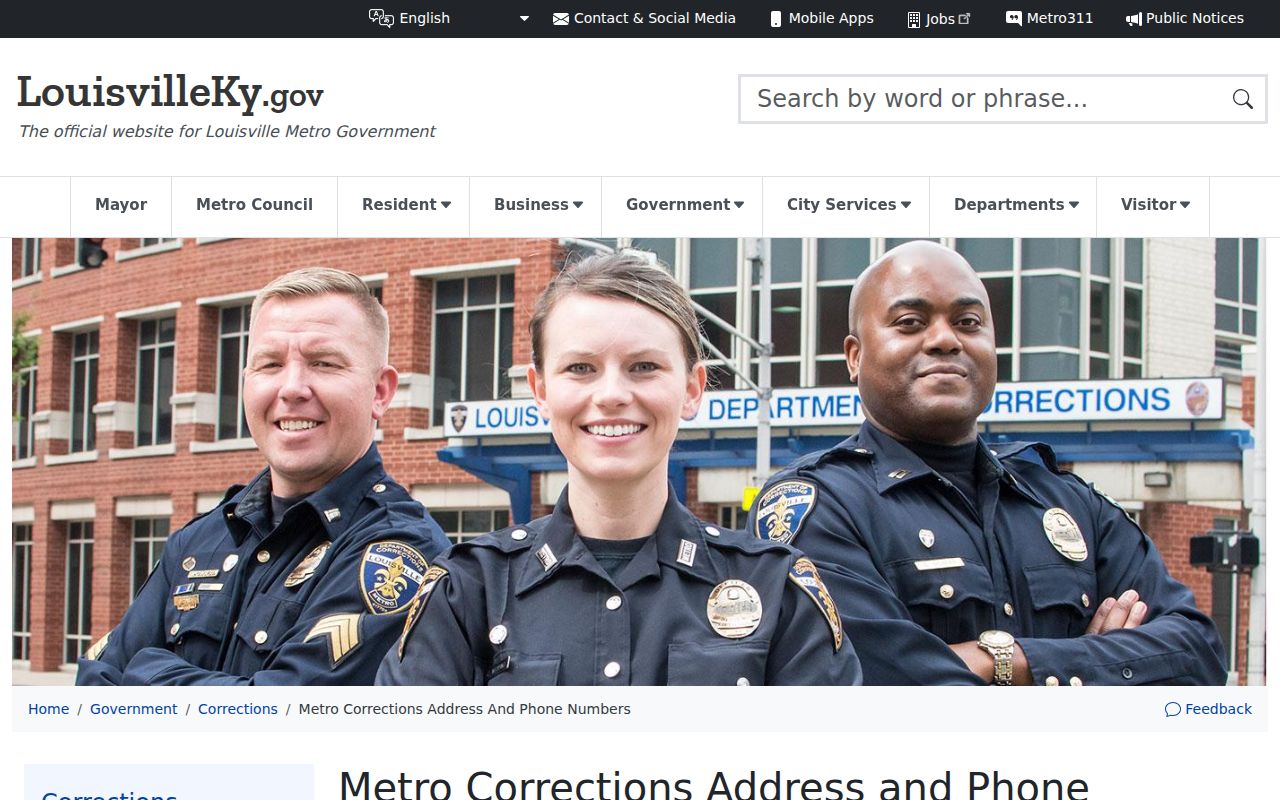
The successful manifest image comes from the official LMDC contact source.
Historical Community Corrections Records
A historic record may use the Community Correctional Center name even though the current public role is unclear. Identify the exact date range, person, CIN, booking, and case. Ask LMDC for the booking and release transaction, facility or housing field, actual release time, release reason, and destination where maintained.
The official closure reference described the change as temporary. It should not be converted into a claim that the building permanently closed, reopened on a certain date, or currently houses a particular program. State only what each dated source supports and seek a current LMDC confirmation for present conditions.
Chestnut Street Release Directions
No current public source establishes a standard physical release point or hour at the Community Corrections Center. Families should not wait at 316 East Chestnut Street based on an old record or directory entry. Confirm the person’s present facility, pickup location, and instructions with LMDC.
If LMDC confirms a downtown release point, use the live TARC trip planner rather than preserving a route number. Stops and service change. Transportation planning begins only after the actual building and exit are confirmed.
Property and account questions are separate from proof of release. Louisville Metro’s retention schedule describes a property-receipt file used for return at release and asks that property be claimed within 90 days. An administrative property record can support follow-up, but the release transaction and court order remain the core proof.
LMDC Transfers and Other Custodians
A Kentucky state transfer should be checked in Kentucky Offender Online Lookup. KOOL can display custody or supervision status, location, conviction information, projected dates, and parole history for KDOC records. A federal handoff belongs in the BOP Inmate Locator. An immigration handoff belongs in ICE's Online Detainee Locator. None of those systems is a substitute for the LMDC release transaction, and the LMDC current roster cannot establish departure from the later custodian.
- Release
- Departure from one named custodian, which may be to the community or another agency.
- Transfer
- A move from LMDC into another jail, prison, federal, or immigration custody.
- Discharge
- An end to the relevant custody or sentence status shown by the responsible agency.
- Detainer
- A request that the holding agency give notice and allow another authority to assume custody.
Record the source's exact words. “Not in LMDC custody,” “released,” “paroled,” and “not in BOP custody” describe different events. Keeping the custodian attached to the status prevents a local jail release from being mistaken for the end of all restraint.
A historical document naming the Community Correctional Center does not establish that the same function exists now. Cite the record date and facility label. For present custody, rely on LMDC’s person-level result and direct confirmation instead of an old building assignment.
Louisville’s consolidated government can make a search for a conventional county sheriff jail point to the wrong office. LMDC is the local corrections custodian, the Jefferson clerk holds the trial-court file, and VINE reports custody events. Keeping those roles separate produces a clearer history for a person linked with Chestnut Street.
Verify Community Center Status
Two official sources must be read together before describing the Chestnut Street site. LMDC's public locations and contact material still names the Community Corrections Center at 316 East Chestnut Street. An official 2021 report says the center temporarily closed in May 2020. The reviewed sources do not establish that housing later resumed. A current location listing alone does not prove that people are housed or released there now.
Call LMDC and ask a narrow operational question before publishing directions or planning a pickup. Confirm whether the building currently houses people, what program operates there, which office manages records, and whether any release is processed at another LMDC site. Record the date and the unit that supplied the answer because building use can change.
Historical searches remain tied to LMDC and the Jefferson court case. Identify the person's booking or CIN, the date range, and the exact Community Corrections Center reference. Request the booking and release transaction, placement or movement record if accessible, release type, and destination. Use VINE only for the custody event it retained, not as proof that a particular building handled the physical exit.
A past document should keep its own facility label and date. It can establish that the center appeared in a historical record, but it cannot settle today's operating status. This careful wording preserves useful local history without turning an unresolved facility listing into a current housing claim.
Search Public Records
Sponsored Results