
Jefferson County 72-Hour Records
The LMDC inmate-information page identifies its public person-level tool as Current Inmates. Research did not locate a separate official three-day released-person feed. The vendor configuration is set to show current offenders only, so the public interface suppresses a released-person view even though the underlying product can support release functions.
That finding calls for a records-first approach. Request an existing LMDC release log or export for an exact 72-hour Eastern Time interval. For a known person, use Kentucky VINE to check whether the matching local-jail record says not in custody and gives a release date. The court’s signed order supplies the legal cause. A state offender belongs in KOOL and KDOC Daily Releases, which have different scope from the Louisville jail.
Build a Precise Three-Day Window
A rolling 72-hour window differs from three named calendar dates. State the start and end, include the time zone, and decide whether the request should end at the current moment or at midnight. This becomes important when a Friday-to-Monday check crosses business days.
- Write both endpoints in Eastern Time and preserve the time the search began.
- Check LMDC Current Inmates for a known active booking and record the CIN.
- Search VINE for the matching local record and any separate DOC record.
- Use the LMDC corrections request form to seek an existing release export for the defined interval.
- Review court and KDOC sources according to the release type and custodian.
This procedure avoids a common error: collecting three screenshots of the current roster and calling the result a release list. Each snapshot shows custody at one moment. It cannot identify every person who entered and left between observations.
Jefferson County 72-Hour Fields
A useful existing export must separate bookings, people, and transactions. Ask for the fields LMDC maintains and make clear that electronic delivery is preferred. A narrow request is easier to match than a demand for all information about every person.
| Field | Why it matters across 72 hours |
|---|---|
| Full name | Starts identity matching but should not stand alone. |
| CIN or booking number | Separates repeated bookings and similar names. |
| Booking date and time | Shows when the covered custody episode began. |
| Actual release date and time | Places the event inside or outside the requested interval. |
| Release reason or type | Preserves LMDC’s own transaction label. |
| Case or charge reference | Points to the Jefferson court order. |
| Receiving agency or destination | Distinguishes community return from transfer where recorded. |
If LMDC cannot provide an existing all-person report, narrow the request to known names or ask how its release log is maintained. Kentucky open-records law generally requires a written determination within five days excluding weekends and legal holidays. That deadline concerns the agency’s response, not a promise that every record will arrive within five calendar days.
Weekend Jefferson County Releases
A three-day review is especially useful after weekends and holidays, but it does not eliminate timing problems. Court authorization can precede jail processing. Bond payment can precede a physical exit. A record posted on Monday may describe an event from the weekend, while a business-date state PDF may require checking an adjacent file.
KDOC’s Daily Releases archive is organized by date, not a rolling filter. When the three-day period spans a weekend or legal holiday, open each relevant PDF and adjacent business dates. Read the releasing facility and exact release type. The archive covers KDOC-controlled sentenced offenders, including some released from county detention centers, but not all LMDC pretrial exits.
Note: Keep the source date and event date separate; the day a PDF or web result is viewed may not be the day custody ended.
LMDC Current-Only Data
The official LMDC public roster helps capture a booking identifier before a person leaves local custody. It is not a past-release archive.
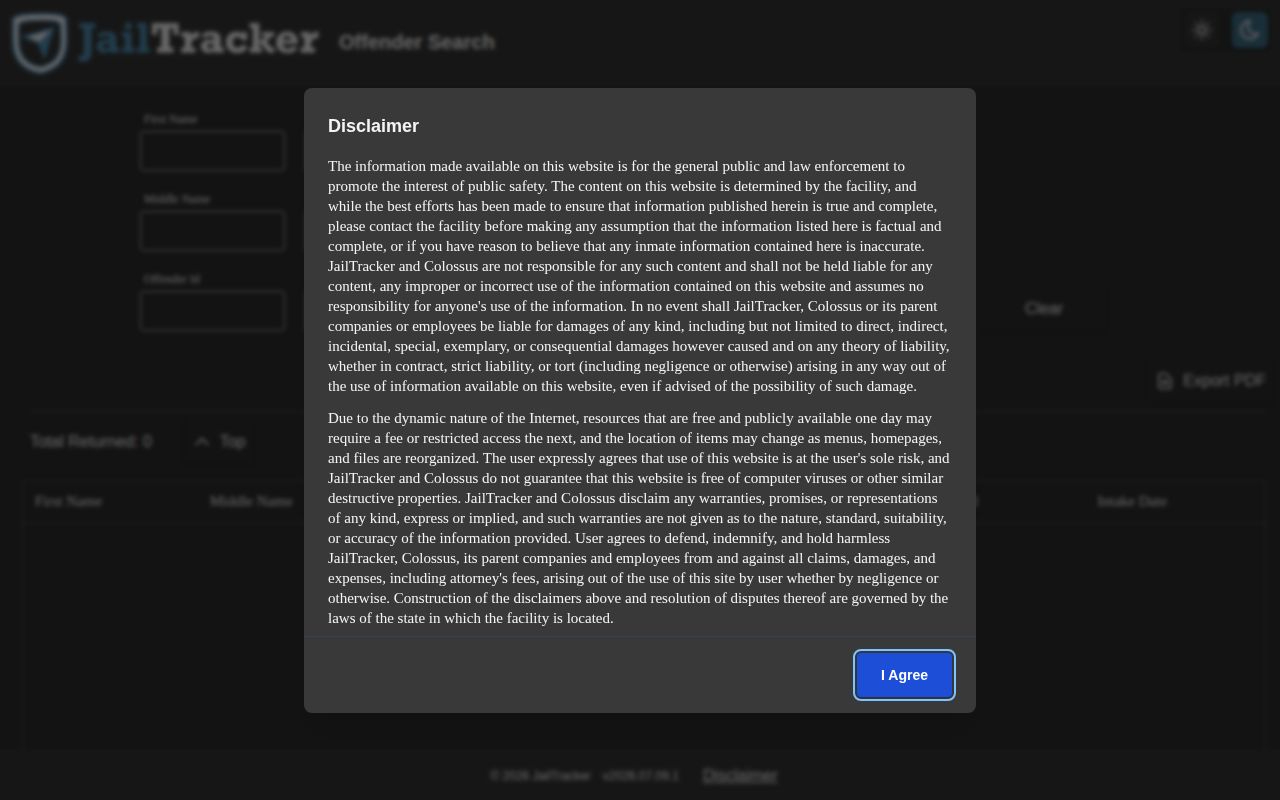
The current-only search can show that a matching record was visible at one observation. When it later disappears, use VINE, an LMDC release transaction, and the Jefferson court order to establish what happened.
The difference is more than wording. A no-result can also reflect a spelling issue, duplicate record, transfer, sealed matter, or changed index. Keep stable identifiers and exact status labels. Never infer dismissal merely because the person no longer appears.
Three-Day Custody Verification
Each system answers a different question. LMDC Current Inmates shows who is locally confined now. VINE can report departure from a listed Kentucky custodian. A Jefferson court file can show the order that authorized bond, dismissal, remand, or another outcome. KOOL and Daily Releases cover KDOC status. The BOP and ICE locators cover their own federal systems.
| Observed result | Safe conclusion | Next check |
|---|---|---|
| Present on LMDC Current Inmates | Listed in local custody at that time | VINE and LMDC for later change |
| Absent from LMDC | No current local result found | VINE, release sheet, and court order |
| VINE says not in custody | Left that listed custodian on the reported date | Destination and legal cause |
| KDOC Daily Releases row | KDOC recorded the stated release type | KOOL for current supervision |
For a search centered on one person rather than a group interval, use the Jefferson County release-record path. It includes federal and immigration checks that do not belong in a local three-day list.
Transfer Is Not Community Release
LMDC may record a release when custody passes to KDOC, another county, a federal authority, ICE, a court-ordered program, or a medical setting. State the event as “released from LMDC” until the destination is independently established. Avoid the broader claim that the person is free.
- Remand
- A court direction that returns or commits a person to custody.
- Detainer
- Another agency’s request for notice and possible continued custody.
- Parole
- Release from prison to rules and oversight in the community.
- Discharge
- The end of the custody or supervision term identified by the responsible agency.
When both a local VINE record and a DOC record appear, inspect and register on both. One person may move from LMDC to the state system within the same 72-hour period.
Compare the 24-Hour Window
The Jefferson County same-day release route is best when the exact event likely occurred within one day and immediate verification matters. The three-day method is better for a weekend span, delayed review, or a date that is known only approximately. Neither page represents an official LMDC published feed.
Use the narrowest interval that fits the facts. A shorter request reduces unrelated records; a wider period can catch an uncertain timestamp. In both cases, ask for the actual transaction rather than relying on a live-roster disappearance. Keep the booking number, source name, observation time, and exact status wording in a small source log.
Jefferson Court Dates Across Three Days
A 72-hour timeline can contain several dates. The court may sign an order before LMDC completes processing. Use the Jefferson court information to identify District or Circuit Court. The local clerk holds the individual case file.
Request signed orders and docket entries for the interval. Match the case number to the booking. Bond, dismissal, time served, remand, and transfer can change custody, but court time may not equal physical exit. Report both dates. A dismissal in one matter does not rule out another case, warrant, or detainer.
An archived or expunged no-result may reflect a lawful restriction, different index, or old file that needs a locator number. Ask the clerk which court holds it and which identifiers are required.
Review a Three-Day LMDC Request
State exact Eastern Time endpoints and seek an existing electronic export. Louisville Metro asks for contact details, a reasonably described record, and the applicable residency statement. The corrections form creates a submission trail.
KRS 61.880 generally requires a written determination within five days excluding weekends and holidays. That response clock differs from the release window. A denial should identify the exception and explain its application.
If an interval export is unavailable, narrow to names, CINs, bookings, or cases. Ask how the release log is maintained rather than requesting new analysis. Preserve the exact release label and destination because a transfer is not community return.
The Louisville jail population dashboard can add aggregate context for a dated period, but it is not a person-level release list. A lower population cannot be converted into a release count because admissions, transfers, and other changes affect the total. Use only the measure and time period the dashboard defines, and keep it separate from named release verification.
Public Record Search
Sponsored Results